
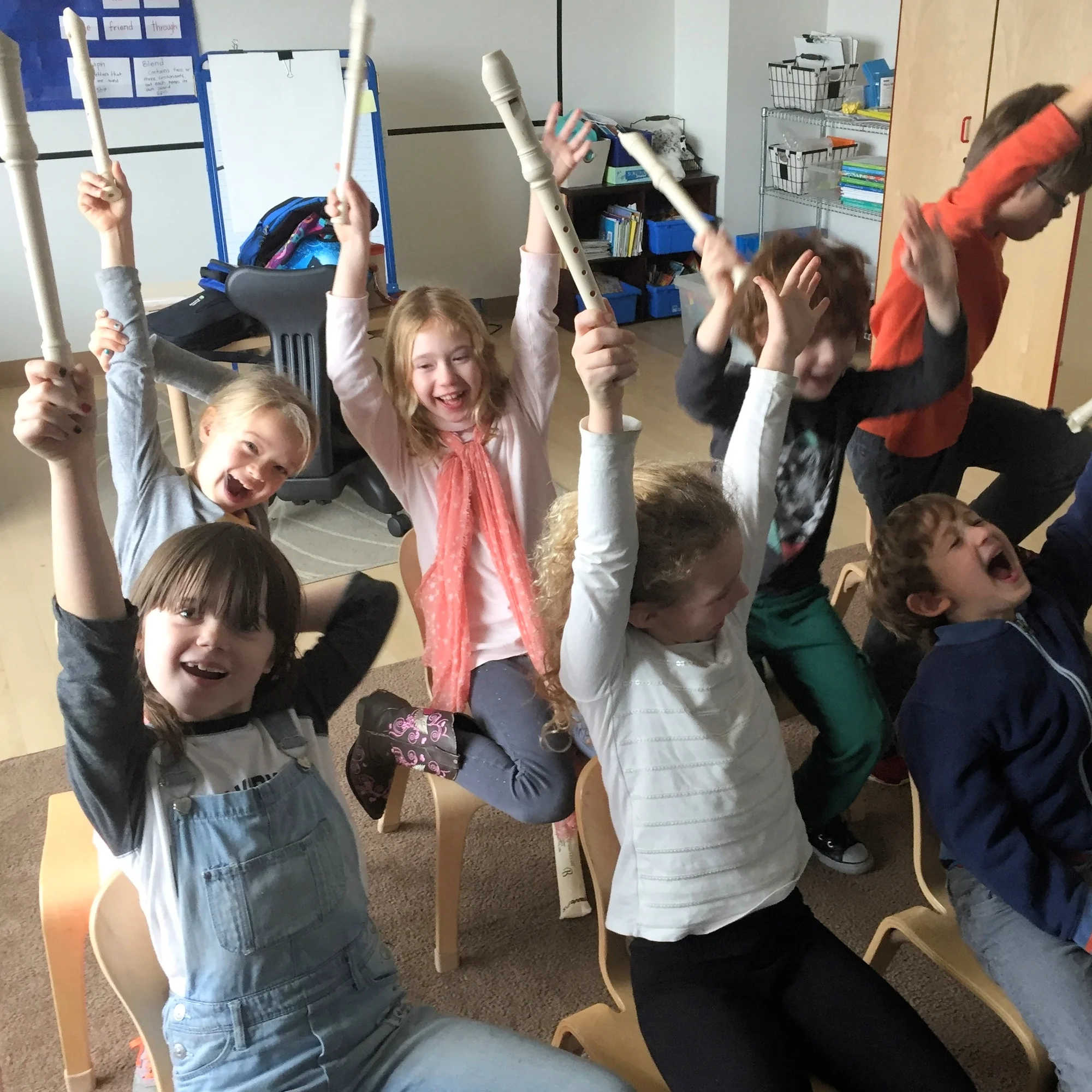

1.0 Home Main caption: Hands-on music workshops to spark the curiosity and talent of students of all ages 2.0 About Creative Music Programs (CMP) is an arts education organization based in Brooklyn, NY. Our team of professional teaching artists specializes in the development, design, and implementation of experiential, multi-disciplinary music programs. Working closely with participating classroom teachers and administrators, CMP’s in-school residencies and curriculum are designed to link with the New York City Performance Standards as well as with the Blueprint for Learning and Teaching in the Arts. Residencies are suitable and adaptable for grades K-12. CMP’s workshops enable students to learn about different aspects of music through hands-on, engaging activities that connect to other disciplines including science, mathematics and technology, social studies and geography, literacy and creative writing, and history. Participants in our programs actively take part in creating and playing music, with no prior musical or instrumental training required. Activities can be tailored for one session or for multi-week residencies. Creative Music Programs also offers concerts and educational assemblies to compliment and expand upon all of our offerings. About Seth Ginsberg, Director: With an educational background in history and training in music theory from the Mannes Conservatory of Music, CMP’s Director, Seth Ginsberg, has ten years of experience as a teaching artist and curriculum designer in the New York City area. Seth has developed and conducted learning through music workshops for New York City Department of Education schools, Department of Education teacher training workshops, the Central Park Conservancy, Owen Consulting, the 92nd St. Y, and Jazz at Lincoln Center. He has been a new teacher Mentor and Program Manager for Learning through an Expanded Arts Program (LEAP) for the past seven years. He is a co-author of Global Understanding, Cultural Literacy published by LeapUSA. 2.1 Advisory Board Samantha Samuels is an Education Manager at Jazz at Lincoln Center (www.jalc.org). Since 2001 she has helped to develop jazz appreciation programs for students, teachers and families, including Jazz for Young People Concerts hosted by Wynton Marsalis and Arturo O'Farrill, the Jazz for Young People Curriculum (grades 4-9), the Nesuhi Ertegun Jazz Hall of Fame, and most recently, the NEA Jazz in the Schools Curriculum (link to www.neajazzintheschools.org), a multimedia toolkit and web-based program designed for high school American history, social studies, and music teachers. Audra Tsanos has been teaching music to the youngest of children (ages birth to 5 years) for the last 8 years in Brooklyn with 200 families a week attending her classes. She has taught music in the NYC public school system and has also worked with special needs children at the Therapy & Learning Center in Brooklyn, NY. She holds a BFA in Theatre Performance. Dave Owen, founder of Owen Consulting Inc., has been involved with the design and implementation of innovative, youth development programs for over ten years. Owen Consulting helps clients build, sustain, and evaluate effective youth development initiatives such as mentoring, adventure education, program evaluation, and professional development. Dave holds a Masters Degree in Human Development and Psychology specializing in Adolescent Risk and Prevention from the Harvard University Graduate School of Education. Susan Sherer has served New York City schools as a teacher, Assistant Principal, and has been the Principal of P.S. 205 in Bayside, Queens for thirteen years. In addition to achieving outstanding results in her school, Ms. Sherer has also served for two years as a Distinguished Faculty member for the Department of Education for Recruitment and Development. She has worked with the Leadership Academy's new Principal on Boarding program as a mentor to new principals, and was appointed as a Cahn Fellow by Columbia Teachers College which recognizes distinguished NYC principals. Howard Freund has been teaching and conducting all levels of instrumental music in the Verona, New Jersey school system for 12 years . He also serves as Co-Director of Verona Summer Music, a summer arts enrichment program that provides various music and theater experiences for 250 students annually. 2.2 About the teachers All Creative Music Program residencies and assemblies are designed and taught by professional musicians and teaching artists (see “What is a teaching artist”) with advanced degrees and training in a wide variety of musical and academic fields. Key areas of expertise include jazz performance and education, American musicology, classical composition, African percussion and dance, and early childhood development. 2.3 What is a teaching artist? What’s a teaching artist? Teaching artists are professional artists who have also developed the ability as educators to effectively draw people into the arts and artistic engagement. Teaching artists are relied upon in organizations including schools, arts institutions, senior centers, juvenile justice and corporate programs, to engage audiences, incite active arts participation, and promote a thoughtful, critical review of our world. The teaching artist field has rapidly grown in the last two decades as their skills become progressively more important in a world where creativity is increasingly associated with productivity. 3.0 Course Guide For detailed descriptions of CMP course offerings: (list all the courses, make clickable) >Click here to download entire course catalog (PDF) PDF of course offerings 3.1 American Music and History A multi-disciplinary, music-based approach to enhancing the teaching of American history which lines up perfectly with Social Studies Standards for the History of the United States and New York. Using the different phases of American song as starting points, Creative Music Program’s "American Music and History" program enables students to experience different aspects of American history through hands-on, engaging music and arts activities. Topics and songs are chosen for their connection to history curriculum such as U.S. geography, biography of important figures, legends, periods of cultural transition, and the arts as a reflection of culture and history. Topics of American music and history include: • Native American culture through song and dance • Revolutionary War songs and fife and drum music • African-American slave songs, work songs, and hollers • Civil War-era folk songs • Westward expansion and pioneers’ songs • Industrial Revolution and train songs • Blues and the Great Migration • Jazz in New Orleans and Harlem • Immigration and the Melting Pot • Folk music, Woody Guthrie, and the labor movement • Pop and rock music as the melting pot of American culture Activities include: • Listening to and appreciation of the many styles of American music and their historical relationships • Reading and singing lyrics to American songs of each era • Native American dance • Jazz and swing dance • Native American instrument building - rattles, shakers, drums, sand scrapers • Songwriting in historical styles; ie: blues, English ballads • Biographical readings on historical figures in music (Stephen Foster, Louis Armstrong, Duke Ellington, Ella Fitzgerald, Woody Guthrie) 3.2 Math Thru Music Creative Music Programs’ “Math Thru Music” program gives students an understanding of and appreciation for the relationship between mathematics and music through rhythmic performance, reading, and notation. Rhythm is the measurement of time and the placement of sounds within time. It is thus ideal for reinforcing NYC Performance Standards in Mathematics such as counting, addition, subtraction and, especially, fractions. Math Thru Music activities include: • Introduction to concepts of rhythm and beat through call and response counting, moving, and clapping • Introduction to concept of symbols; notes are symbols which represent lengths of sounds in music • Introduction to symbols of note types - whole, half, quarter, eighth, sixteenth • Creating links between note values and fractions Sample questions: How many eighth notes in 2 beats? What mathematical operation can you use to figure this out? How many sixteenth notes in 3 beats? • Learning to play written rhythms • Transcribing rhythms into notes and symbols on paper • Organizing notes into percussion music on staff paper • Composing percussion pieces using notes and sound symbols • Making of simple percussion instruments - gamelans, bongos, shakers • Learning to play written rhythms and songs on percussion instruments • Introduction to musical concept of polyrhythm - multiple rhythms played simultaneously • Performance by classroom percussion ensemble of student compositions featuring multiple parts and instruments 3.3 Songwriting and Recording Engaging students in the elements of music, literacy, and creative writing through a hands-on songwriting residency culminating with a recording of a song written cooperatively by the entire class. An excellent enhancement of English Language Arts standards. Songwriting activities include: • Introduction to the many styles of American song including pop, jazz, blues, hip-hop, Tin Pan Alley, early rock and roll • Hands-on experience with the basic terms of musical literacy: melody, rhythm and beat, tempo, lyrics • Analysis of song form and arrangement using verse-chorus-bridge model • Analysis of song lyrics for form, style, and content including rhyme scheme • Autobiographical songwriting in the style of rap performed for class with live accompaniment; Example: I am not you, you are not me This is my autobiography Sometimes easy, sometimes hard You are always just who you are Me, Myself, and I... My name is Sophia, I’m nine years old I live in Brooklyn and I have no fear • Biographical songwriting in the style of folk artists such as Woody Guthrie involving interviewing classmates for information • Songwriting and performing within the AAB, 12-Bar blues form in the style of Muddy Waters and the Mississippi Delta; Example: I Woke up this morning and couldn’t find my shoes Yes, I woke up this morning and couldn’t find my shoes That’s when I knew I had those late for school blues • Jazz, improvisation, and scat singing in the style of Ella Fitzgerald • Classroom songwriting project based on a theme chosen by students • Introduction to basic 4-track recording technology and microphone technique • Performance and recording of class song • Design of cover art for CD recording of class song 3.4 Hangin’ With the Orchestra An experiential introduction to the orchestra and its instruments and sounds, famous composers and their compositions, and the basic movements of conducting. Combining recordings, live performance, literature, photographs and illustrations, and unique, experiential activities such as lessons in conducting and musical storytelling, the goal of Creative Music Programs’ “Hangin’ With the Orchestra” is to inspire a sense of wonder at the grandeur of the classical symphony orchestra. Composers and compositions introduced: • Benjamin Britten - The Young Person’s Guide to the Orchestra • Sergei Prokofiev - Peter and the Wolf • Camille Saint-Saens - Danse Macabre, Op. 40 • J.S. Bach - Cello Suite No. 1 in G major; The Goldberg Variations • Maurice Ravel - Bolero • Aaron Copland - Billy the Kid Suite; Rodeo • Wolfgang Amadeus Mozart - Eine Kleine Nacht Musik • Ludwig van Beethoven – Fifth Symphony Activities include: • Live performance examples of some instruments of the orchestra • Introduction to sounds and sights of the four families of the orchestra • Sound experiments with string size and thickness and their relation to pitch • Imaginative body movement and dance • Familiarization with the use of instruments by involving students in creative process of choosing sounds to play characters in Peter and the Wolf • Creative listening, writing, and storytelling linking to music through use of symphonic poems such as Danse Macabre • Learning basic concepts of composition through word game exercises in theme and variation, counterpoint, and polyphony Example: Write a sentence (the melodic theme) and then write five variations on the theme using the techniques of diminution (same sentence read faster), augmentation (same sentence read slower), writing backwards, and bunching together or spacing. A donut is a great way to start the day (theme) day the start to way great a is donut A A great donut is a way to day the start A donutisa great ---------- tostart the day Adonutisagreatwaytostarttheday A donutis a great way to startthe day A donut is a great way to start the day (recap of theme) • Hands-on lessons in conducting an orchestra with focus on traditional hand and baton movement technique, tempo, meter (4/4, 2/4, 3/4), and dynamics 3.5 Cultural Music, Dance, and Art Referring to Social Studies Standards for World History and Geography, students will learn about the musical styles and instruments of different cultures and interact with the music through lessons in songwriting, singing, dancing, instrument building, and geography. Students will learn to listen more attentively to music and, through art, dance, singing, and storytelling activities, will gain a deeper appreciation for the richness of the world’s cultures. Music Around the World may include the following countries and cultures: • Native American Navajo • Africa - Nigeria, Kenya, Mali • The Caribbean - Jamaica, Cuba, Trinidad • South America - Chile, Brazil, Argentina • Mexico • Central America - Guatemala • India Activities include: • Map making and geography • Introduction to percussion instruments and call and response rhythms of culture; i.e.: Senegalese djembe rhythms • Legends and folk tales: creation, trickster, hero, ecological myths and songs through literature • Making shakers and percussion instruments using patterns and art work of culture • Learning songs and lyrics in original languages; i.e.: Bobo Waro Ferro Satodeh (Everybody Loves Saturday) from Nigeria • Word games using technique of Indian ragas • Traditional dancing - African dance, salsa, tango • Final performance combining song, dance, language, storytelling, and instruments 3.6 Hip-Hop, Shakespeare, and Muhammad Ali “Hip-Hop, Shakespeare. and Muhammad Ali” is Creative Music Programs’ residency designed especially to engage and expand the interests and passions of middle school and high school students. Combining English Language Arts Standards for critical analysis and evaluation of literature, poetry, rhetoric, and public speaking with a study of the rhythms and wordplay of hip-hop, this residency takes students on a journey connecting their pop heroes with writers and leaders of the recent and distant past. The musicality of great oration is the connecting thread. Artists and works include: • 50 Cent • Nas - I Know I Can • William Shakespeare - Romeo and Juliet • Baz Luhrmann’s Romeo and Juliet 1996 • Muhammad Ali’s quotes, speeches, aphorisms, interviews • Martin Luther King - I Have a Dream speech Activities include: • Critical reading and discussion of texts for content, form, meter, rhyme • Critical listening and discussion for content, form, meter, rhyme • Viewing and discussion of scenes, monologues, soliloquies • Comparing and contrasting different rhetorical and oratorical styles of samples • In-class, out loud readings of texts; ie: “Romeo, Romeo wherefore art thou...” • Introduction to sampling, drum machine technology and microphone technique • Reading of historical texts set to modern hip-hop beats and rhythms • Debates and public speaking exercises set to hip-hop rhythms created by class 3.7 Music for Brains, Hands, and Feet Creative Music Programs’ residency specially designed for kindergarten classes focuses on learning through song, creative movement, phonics, and literature. By reading, writing, and singing simple songs based on stories and ideas learned through topical literature, students will incorporate content and language skills into fun musical performance activities. Activities include: • Warm-up exercises including stretching, call and response singing and creative movement • Introduction to singing of solfege scales using Do, Re. Mi... from “The Sound of Music” • Introduction to guitar and the string instrument family with live performance and literature such as “Meet the Orchestra” by Ann Hayes • Group singing of classic American folk songs; ie: Oh, Susannah, Michael Row Your Boat Ashore, I’ve Been Working on the Railroad, The Fox Went A-Hunting • Phonics through scat singing - introduction to the art of scat singing through listening samples from Ella Fitzgerald and singing of written scat samples Example: Doo wop sh boom bap bop bam bip • Simple songwriting activities including setting student-written sentences to well-known melodies such as Mary Had a Little Lam • Final performance incorporating songs and dance interpretation of lyrics 3.8 Instrument Building Workshop A residency based on the study, building, and playing of folk instruments from musical cultures around the world. Special attention will be paid to the natural environment, geography, and climate that these cultures evolved in as the scarcity or abundance of particular natural resources is the deciding factor in the types of instruments innovated by a particular culture. The role of music in each society as well as the religion, language, history, and mythologies of the cultures studied will be emphasized. All instruments will be built by hand by the students using materials supplied by Creative Music Programs. Whenever possible instruments will be made with actual materials used in folk instruments. When not practical, alternative materials will be used. Students will learn simple musical selections from each culture on their own instruments. Cultures and Instruments include: • Indonesia - gamelans, gongs, metallaphones • Senegal - djembe • Native American Navajo - sand scrapers, shakers, rattles, drums • Ireland - bhodran • Australia - rain stick • Congo - mbira • Caribbean - shakers, maracas, guiras 3.9 Assembly Programs and Performances Educational assemblies and live performances are available to compliment any of Creative Music Programs’ residencies or as stand-alone programs. All programs are led by professional musicians and teaching artists who are chosen to run specific assemblies based on their musical fields of expertise. For example, “Jazz and American Music” assemblies are led by professional jazz musicians with experience working with children; an assembly on African music and dance will include both professional musicians and dancers; a “Hangin’ With the Orchestra” program will include classically-trained musicians and teaching artists. Creative Music Programs specializes in hands-on, experiential music education. Therefore, assemblies are never simply concerts for kids - all programs consist of performance, explanation, visual aides, audience participation, and a question and answer period. 3.91 Pre-Residency Administrative and Planning Day An administrative planning day is an extremely useful and often necessary element of a successful arts residency. On a planning day, the Creative Music Programs teaching artist holds organizational and curricular meetings with the teachers with whom he or she will be working, explaining the subject matter and the experiential style of teaching they will bring into the classroom. The planning session is also the time for the classroom teachers to fill in the teaching artist on the academic level, attention span, and discipline issues of their classes. The teaching artist can also learn about the specific areas being studied in the classroom in order to more effectively plan the content and classroom management style of the given residency. 4.0 How we work Workshops and projects are custom designed to meet the needs of individual clients. Projects and curriculum are adapted for specific age groups and developmental levels. Activities can be tailored for one session or for multi-week projects. Generally, classes or groups meet with their teaching artist for one session a week for five to twenty weeks. 5.0 Client List Past and present clients include: • New York City Department of Education • Learning Through an Expanded Arts Program (LEAP) • Central Park Conservancy • Jazz at Lincoln Center • 92nd Street Y • Owen Consulting (Youth Development Programs) 6.0 Contact us Seth Ginsberg, Director Creative Music Programs 255 North Eighth Street, #1L Brooklyn, NY 11211 (646) 284 – 4033 seth@creativemusicprograms.com NEW YORK Ms. Vane We explore the city we explore the town we ride to Manhattan and we take a look around you’ve never been here? Ain’t that a pity? this is how we do it in New York City! New York, New York it’s a baseball town Yankees always up, Mets always down Yanks from the Bronx, Mets from Queens A-Rod has the bat and he’s gonna make a scene chorus F train, R train, 1, 2 , 3 connect the five boroughs, take a ride with me You hear the trains screeching on subway the tracks and there go running those subways rats the train is crowded, get me out of here there’s a weird, fat guy who smells like beer the train is crowded and it’s getting dark I’m really trying hard to get to Sunset Park chorus Brooklyn, Bronx, Manhattan, Queens, SI where you at, where you at? Brooklyn, Bronx, Manhattan, Queens, SI I can’t hear you where you at, where you at? 5 boroughs where you at, where you at? On 5th Avenue the girls and boys shop on 5th Avenue they just won’t stop the boys wear tims(?) the girls wear heels then they hit Friday’s for a meal Girls wear dresses on 5th Avenue boys wear sweats like all boys do if you have a passion for New York’s fashion follow us up to the island of Manhattan chorus I Know You Like My School Mr. Pierre I.S. 158 Bronx Winner of school song contest Uh huh, I know you like my school Uh huh, later it will do you good Our teacher has a way with words He be like, little boy/girl learn your verbs In the real world a smile gets you so far You need an education to be a real star Uh huh, I know you like my school Uh huh, later it will do you good This is 158, you should appreciate Stop the violence, focus your mind Get the knowledge like Albert Einstein Without that degree who knows where you’ll work You may work at Burger King with the soda jerk Uh huh, I know you like my school Uh huh, later it will do you good Will I be a doctor? Will I be a star? Will I get money and be chillin’ in my car? Will go the wrong way and drop out of school? Will I hang with thugs like the rest of them fools? Uh huh, I know you like my school Uh huh, later it will do you good